


Loose stools, abdominal pain and diarrhoea do not identify the organism causing an illness, so choosing this combination requires more than matching symptoms to a tablet. By the end, you will know what each ingredient covers, when a clinician may consider the combination, how to take a prescribed dose safely and what to verify before supply in Nashik.
Key takeaways
- Use the combination only when a clinician suspects susceptible bacteria plus anaerobic or protozoal infection.
- Take the prescribed dose with water and separate it from antacids or mineral supplements.
- Avoid alcohol during ornidazole treatment and seek help for severe tendon, nerve, or allergic symptoms.
- Verify the prescription, batch number, expiry date, seal, and licensed supplier before dispensing.
What ofloxacin and ornidazole each cover
Ofloxacin is a fluoroquinolone antibacterial that acts against susceptible bacteria by interfering with enzymes needed for bacterial DNA replication. Ornidazole is a 5-nitroimidazole agent active against susceptible anaerobic bacteria and certain protozoa. Together, they can cover an infection involving susceptible bacteria alongside anaerobic organisms or a protozoal cause.
A clinician may consider this combination when the suspected gastrointestinal syndrome supports coverage beyond ofloxacin alone:
- Suspected invasive bacterial diarrhoea, where treatment depends on severity and clinical findings.
- Dysentery or a cholera-like illness, which can require a different drug, dose or duration.
- Giardiasis or amoebiasis, where stool testing and targeted therapy can influence the choice.
The possible benefit is broader organism coverage in a selected mixed infection, not proof that two medicines are always stronger or better. The trade-off is exposure to ofloxacin’s fluoroquinolone risks, ornidazole-related adverse effects and additional antimicrobial-resistance pressure.
Diarrhoea, loose stools or abdominal pain alone do not establish that this tablet is appropriate. Viral gastroenteritis, food intolerance and other nonbacterial causes need different care, with oral rehydration and severity assessment remaining central. Good ofloxacin ornidazole medicine information should explain this diagnostic limit.
Claims about ofloxacin ornidazole tablet benefits matter only when tied to a confirmed or strongly suspected indication.
When the diagnosis supports the combination—and when it does not
A clinician may consider this tablet when the working diagnosis points to a susceptible bacterial infection with anaerobic or protozoal involvement. Examples include selected mixed bacterial–anaerobic gastrointestinal infections, some dysentery presentations, and confirmed or strongly suspected giardiasis or amoebiasis.
Stool testing, travel and food exposure, fever, blood or mucus, duration, and local resistance patterns help separate these conditions.
| Syndrome | What may support prescribing | Why diagnosis matters |
|---|---|---|
| Acute watery diarrhoea | Suspected bacterial illness with features suggesting mixed infection | Viral gastroenteritis often needs hydration, not antibiotics |
| Dysentery | Blood or mucus with fever and invasive bacterial suspicion | The preferred antibiotic depends on the likely organism and resistance |
| Giardiasis or amoebiasis | Confirmed or strongly suspected protozoal infection | Treatment choice and duration differ from bacterial diarrhoea |
| Food intolerance or functional pain | No evidence of infection | Antibiotics do not correct the underlying cause |
Diarrhoea, loose stools or abdominal pain alone provide insufficient evidence because they also occur with viruses, contaminated food toxins, lactose intolerance, inflammatory bowel disease, medication effects and appendicitis. A broad combination does not automatically deliver greater benefit than a narrower, diagnosis-directed treatment; it adds adverse-effect and resistance concerns.
Read ofloxacin ornidazole medicine information alongside the prescriber’s diagnosis, not as a substitute for it. The claimed ofloxacin ornidazole tablet benefits apply only when the suspected organisms and clinical syndrome justify both ingredients.
How to take a prescribed dose and prevent avoidable absorption problems
Understanding ofloxacin ornidazole tablet benefits depends on taking the prescribed strength at the prescribed interval, not on taking extra tablets. Swallow each dose with a full glass of water. Follow the label about meals; taking it after food can reduce nausea, while ofloxacin absorption is affected by certain minerals.
1. Take doses at evenly spaced times and finish the course unless the prescriber stops it. Do not change the dose or use a leftover strip.
2. Take a missed dose when you remember, unless the next dose is due soon. Skip it in that case; never double the dose.
3. If you vomit soon after taking the tablet, do not automatically repeat it. Contact the prescriber or pharmacist, tell them when you took it and when you vomited, and follow their replacement advice.
4. Avoid alcohol while taking ornidazole and for at least three days after the final dose. Alcohol can worsen nausea, dizziness and other reactions.
5. Keep ofloxacin at least two hours before or four to six hours after antacids containing aluminium or magnesium, sucralfate, iron, zinc, calcium supplements or multivitamins. Ask about separation if your product label gives different instructions.
Do not self-adjust a fixed-strength tablet for kidney disease. Ofloxacin is cleared substantially through the kidneys, so the prescriber must check renal function, tablet strength and whether another regimen is safer.
Safety checks before and during treatment
Before supply, the prescriber must review kidney function, because ofloxacin is substantially eliminated through the kidneys. A fixed-strength tablet is not automatically suitable for reduced renal function; the strength, dose adjustment or a different regimen must be checked.
Flag these conditions before prescribing:
- Previous ofloxacin or other quinolone tendon disorder, serious quinolone allergy, peripheral neuropathy, seizures or other neurological disease
- Pregnancy, breastfeeding, paediatric age or liver disease
- Heart rhythm disease, fainting, low potassium or medicines that prolong the QT interval
- Current corticosteroids, antiarrhythmics, certain macrolide antibiotics, antipsychotics, warfarin, insulin or other diabetes medicines, and seizure treatment
New tendon pain or swelling, especially at the heel, requires stopping activity and prompt medical advice. Seek urgent care for numbness, burning pain, marked weakness, confusion, seizures, fainting, fast or irregular heartbeat, facial swelling, breathing difficulty, or widespread blistering rash.
| Check | Why it matters | Action |
|---|---|---|
| Kidney function | Ofloxacin exposure rises when clearance is reduced | Confirm renal results and the prescribed strength |
| Neurological history | Ofloxacin and ornidazole can cause neurological adverse effects | Review seizure history, neuropathy and new symptoms |
| Diagnosis | Dysentery, cholera-like illness, giardiasis and amoebiasis need different treatment choices and durations | Do not use general ofloxacin ornidazole medicine information instead of clinical assessment or indicated stool testing |
Stop and contact the prescriber for severe or persistent diarrhoea, especially with blood, fever or dehydration; antibiotic-associated colitis needs assessment.
What prescribed supply in Nashik should verify
A pharmacy, hospital or healthcare buyer should verify the product, supplier and patient-specific prescription before dispensing this prescription antibacterial tablet in Nashik. Nashik does not alter the medicine’s pharmacology, so claims about tab ofloxacin plus ornidazole benefits in nashik are not a substitute for clinical selection.
1. Buy through a licensed medicine channel and retain the invoice, supplier details and delivery record. If SUSHMRAJ PHARMA is involved, record its invoice and batch-level documents rather than relying on a catalogue listing.
2. Match the prescription with the pack: confirm the strength of both ofloxacin and ornidazole, dosage form, release characteristics, manufacturer or marketer, product licence details, batch number, expiry date and storage instructions. Do not substitute another brand solely because the front label names the same ingredients.
3. Confirm that the prescription identifies a diagnosis or suspected syndrome, not simply “diarrhoea” or “stomach infection.” Do not promote ofloxacin plus ornidazole in nashik for self-medication or routine loose stools.
4. Before dispensing, refer pregnancy, breastfeeding, paediatric age, seizures or other neurological history, liver disease, kidney impairment and concurrent medicines to the prescriber. Ofloxacin is substantially cleared by the kidneys, so a fixed-strength tablet is not automatically suitable when renal function is reduced.
Reject stock with a broken seal, unreadable batch details, uncertain provenance or unsuitable storage history, and quarantine it for investigation.
Related product
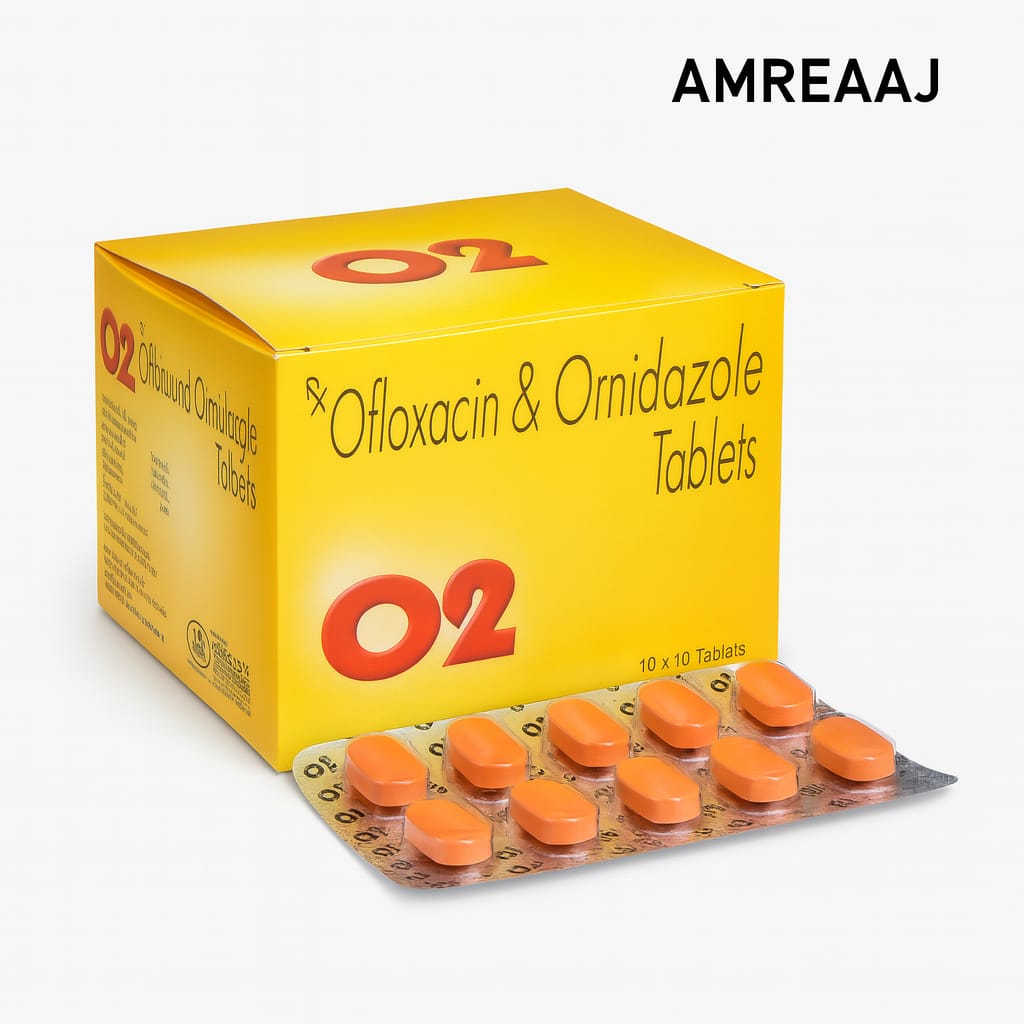 | ANTIBACTERIAL O2 TAB Ofloxacin (200mg) + Ornidazole (500mg) ₹207 O2 Tablet rx_img Prescription Required Marketer Medley Pharmaceuticals SALT COMPOSITION Ofloxacin (200mg) + Ornidazole (500mg) Product introduction... View product → |
Frequently asked questions
What do ofloxacin and ornidazole each cover?
Ofloxacin targets susceptible bacteria, while ornidazole targets susceptible anaerobic bacteria and certain protozoa. The combination is relevant only when the suspected infection includes organisms covered by both medicines.
When does ofloxacin plus ornidazole support a diagnosis?
It supports treatment when a prescriber identifies a likely mixed infection involving susceptible bacteria with anaerobic organisms or a protozoal cause. It is not a general treatment for every episode of diarrhoea, abdominal pain, or infection.
How should you take a prescribed ofloxacin and ornidazole tablet?
Take the prescribed dose with water at the scheduled time. Keep antacids containing aluminium or magnesium, iron, zinc, and calcium supplements separate from ofloxacin according to the prescriber or product instructions.
What should prescribed supply in Nashik verify?
Check the prescription, manufacturer, strength, dosage form, batch number, manufacturing and expiry dates, intact seal, storage instructions, and the supplier's drug licence details before dispensing.